
eSIM or Physical SIM: How Foreigners Can Get Connected in South Korea
Your phone turns on before the plane reaches the gate. A notification appears: roaming is now active. It is expensive.
That notification will run every day you are in Korea unless you do something about it. For a week-long trip, roaming charges from a US carrier add up to $70 to $105 in daily pass fees before you have spent anything on food or transit. Some carriers charge the full daily fee the moment you send a single text.
Korea has one of the fastest and most complete mobile networks in the world. Subway tunnels have full LTE coverage. Remote hiking trails have 5G. The infrastructure is not the problem. The problem is that your carrier at home charges you to access someone else’s network, and the rate has nothing to do with what you actually use.
Two options exist that cost a fraction of what roaming does: a physical SIM card from one of Korea’s three carriers, or an eSIM you activate before you board. Either one gets you connected for the cost of a few meals. Neither requires a Korean bank account or an address in the country.
The Networks
South Korea has three carriers: SK Telecom (SKT), KT, and LG U+. Between them, they built one of the densest mobile networks on the planet. By 2025, 5G reached over 90 percent of the population, and 4G LTE covers everything else. Signal exists underground in subway tunnels, in mountain national parks, and on remote island ferries. The network does not drop.
SKT is the largest carrier and generally has the best raw speed and coverage. KT is close behind, with stronger discounts for online purchases and the ability to extend plans if your stay runs longer. LG U+ is competitive on price. For a visit of a week or less, the difference between the three is small enough that the choice rarely matters.
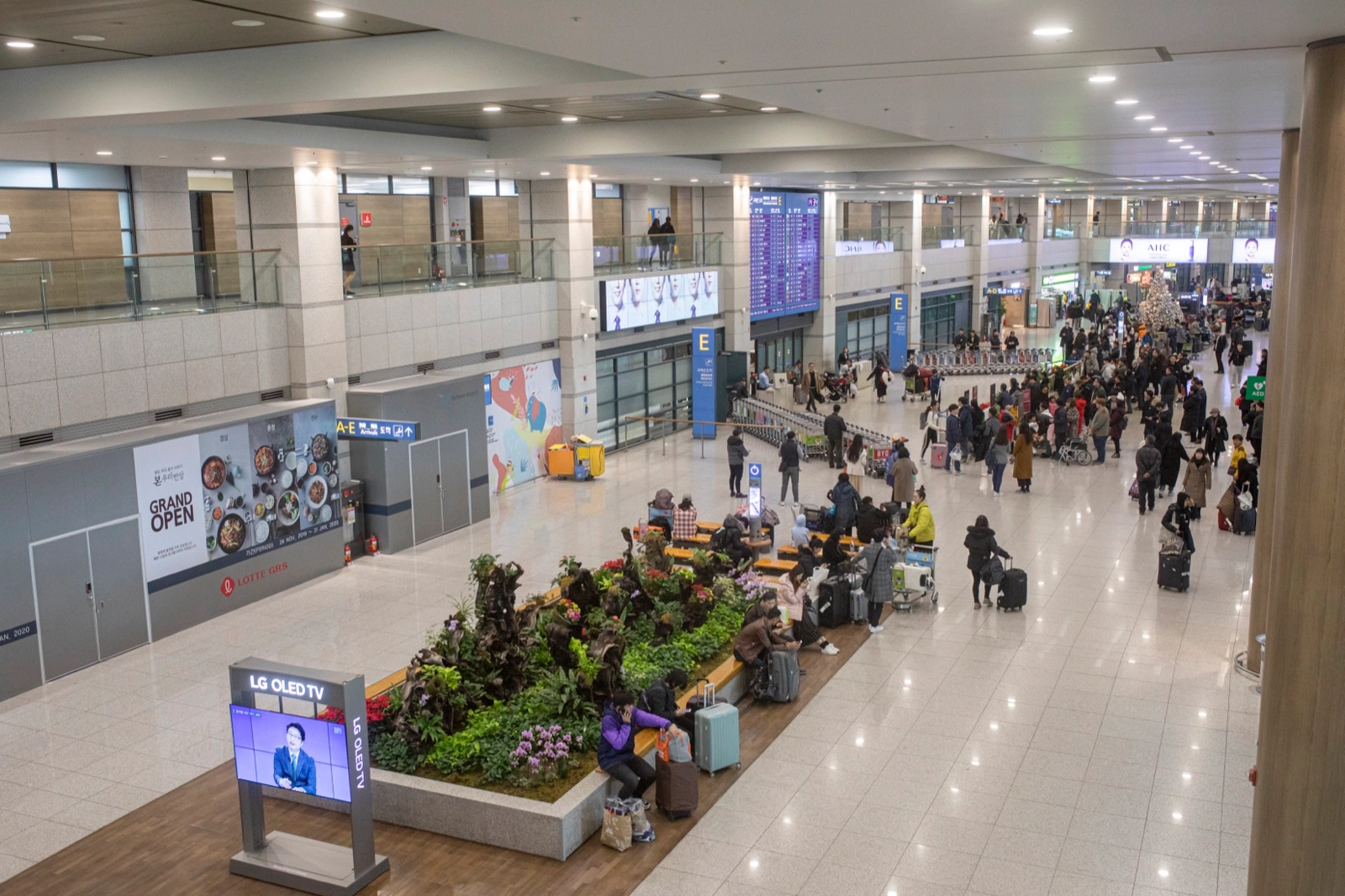
All three operate booths in the arrival halls at Incheon International Airport, Terminal 1 and Terminal 2, with 24-hour service. The same desks exist at Gimpo Airport and Gimhae International Airport in Busan, though on more limited hours, roughly 6am to 11pm. You do not need to go further than the arrivals hall.
Physical SIM
A physical SIM card, called 유심 (yu-sim) in Korea, costs between ₩25,000 and ₩70,000 depending on plan length and data limits. A five-day unlimited data plan runs around ₩27,500 at the airport counter. A 30-day plan sits near ₩70,000.
To buy one, bring your passport. That is the only document you need as a tourist. The attendant registers the card, inserts it into your phone, and the connection is live within a few minutes. Airport staff at carrier booths speak enough English to complete the transaction.
Buying online before you fly is cheaper. KT’s five-day unlimited plan costs ₩24,700 through their website versus ₩27,500 at the counter. SKT and LG U+ allow pre-orders with airport pickup. You pay less and skip the queue.
Most tourist SIM plans are data-only. If you need a local Korean phone number for calls or texts, ask specifically when you buy. KT and LG U+ both offer plans with a local number at the airport desk.
eSIM
An eSIM is a digital SIM built into the phone itself. Instead of inserting a card, you scan a QR code and the plan activates over the network. No SIM tray. No physical swap.
Compatible devices include iPhone XS and later, Samsung Galaxy S20 and later, and most Android flagships released after 2020. If your phone supports it, the process is: buy the plan online before your flight, scan the QR code in your phone’s settings, and you are connected the moment you land. No queue. No counter.
Third-party providers like Airalo and Saily sell Korea eSIM plans starting around $20 for five days of unlimited data, up to $69 for unlimited data over 30 days. Korean carriers also sell eSIMs directly: SKT’s plans run from ₩6,600 for a single day to ₩71,500 for 30 days at 5G speeds. KT’s online eSIM plans are slightly cheaper and allow extensions if your stay runs longer than planned.
One limitation: on phones that support only one active SIM at a time, the eSIM replaces your home number while it is active. Your home SIM goes offline for the duration. On dual-SIM devices, both run simultaneously. Most travelers find this acceptable.
Roaming is not a default you have to pay. Korea’s carriers built the infrastructure; the only question is which layer of access you buy into. For most visitors, an eSIM purchased before departure is the lowest-friction option: activated on the plane, connected before you clear customs. For those with older phones or who need a local number for calls, the airport desk takes five minutes and a passport. The connection is there. You just have to look for it before you land.
References
- Prepaid SIM card details by carrier (SKT, KT, LG U+): https://prepaid-data-sim-card.fandom.com/wiki/Korea_(South)
- SKT vs KT vs LG U+ eSIM comparison: https://www.nomadesim.com/blog/skt-kt-lg-south-korea-esim
- Korea SIM card and eSIM guide 2026: https://krutils.com/main/guides/korea-sim-guide-2026/
- International roaming costs breakdown: https://simology.io/blog/international-roaming-costs-2026-price-breakdown
- Buying a SIM card or eSIM in South Korea: https://whatsdavedoing.com/buying-sim-card-esim-south-korea/